

Tulle Intentions
Uptown Girls costuming and dressing for joy.

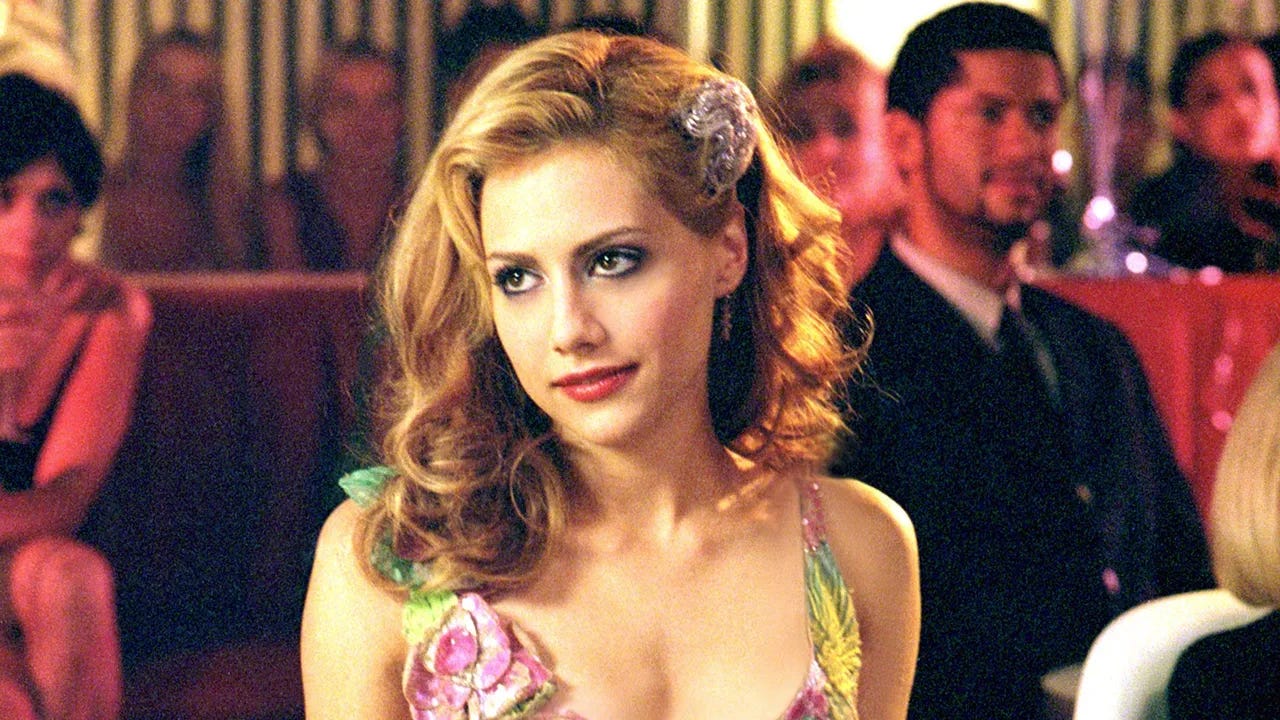
When Uptown Girls premiered in 2003, it was easy to write off as another early 2000s confection. A pastel coated dramedy about a spoiled girl forced to grow up. But rewatching it now, what stands out most isn’t the familiar beats of a coming of age story. It’s the way Molly Gunn dresses like someone who’s trying to build a cocoon out of sequins and silk.
Brittany Murphy’s Molly is the daughter of a rock legend, living off his royalties in a Manhattan fantasy where adulthood is perpetually postponed. Her clothes make that refusal tangible. Every dress, skirt, and tank was made for someone who still believes in magic even when reality keeps knocking.


Her wardrobe runs on pure instinct. Early in the film, Molly drifts through her apartment in a pale pink camisole and tulle skirt, the kind of outfit you’d expect on a daydreaming teenager, not a woman in her mid twenties. But the look makes emotional sense. Her father’s death froze her in time, and her closet froze with her. Every layer of chiffon and velvet becomes a way to stay in that world a little longer. A world where her parents are still alive and money still cushions every fall.
When the money runs out, her wardrobe doesn’t immediately change. She’s broke, but still dressed like a fairy tale princess who hasn’t gotten the memo. Even in crisis, her outfits cling to color and whimsy. This visual dissonance tells the story before she ever admits what’s happening. Molly keeps wearing joy like a habit she can’t quit.
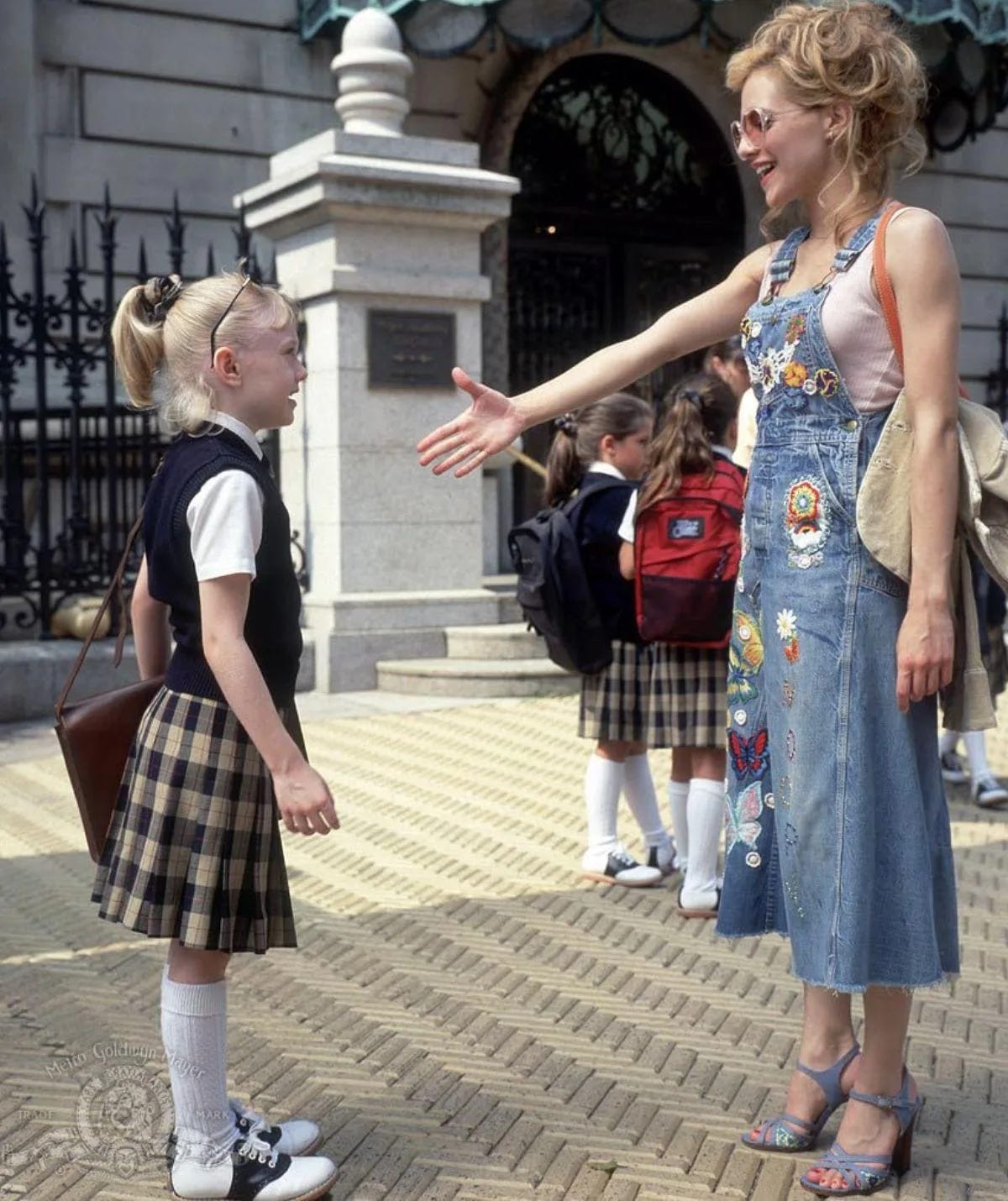
Opposite her, Dakota Fanning’s Ray is dressed in the complete inverse. Gray pleats, muted neutrals, structure over softness. Her miniature adult wardrobe makes her look like a banker trapped in an eight year old’s body. The two of them side by side become a perfect costume study in arrested development and premature maturity. Ray’s clothes are about control; Molly’s are about evasion.
Over time, though, Molly’s style starts to shift. The bright, sugary palette softens into something lived in. The transformation’s never heavy handed, she doesn’t suddenly show up in beige trench coats or pencil skirts, but there’s a subtle grounding. When she trades her tutu skirts for jeans and layered blouses, it feels like she’s stitching together a version of herself that can survive the real world without giving up the parts that make her sparkle.
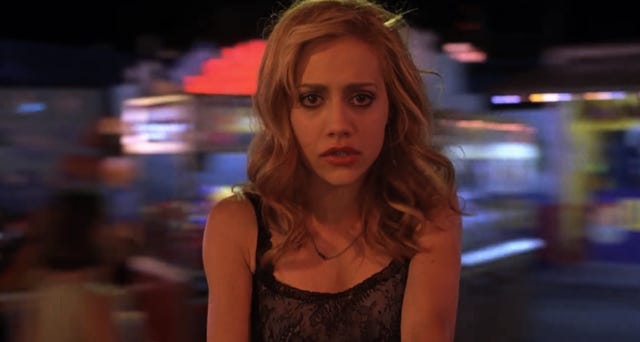
Murphy carries this evolution beautifully. She plays Molly with a kind of emotional translucence, joy and sadness bleeding into each other until they’re inseparable. Her costumes capture that same quality. Even at her most whimsical, she never looks like a caricature. She looks like someone who’s trying to turn pain into beauty, grief into something wearable.
The brilliance of Uptown Girls’ costuming lies in how quietly it tells the truth about its heroine. Molly Gunn dresses to stay safe, to stay soft, to stay seen. Her clothes are both a performance and a coping mechanism. The prettiest possible version of survival. Brittany Murphy makes that contradiction feel real, even noble. Watching her spin through the world in silk skirts and cowboy boots feels like watching someone fight for her right to feel joy, even when she doesn’t quite know how to live yet.
Two decades later, Molly’s wardrobe still feels like a relic of early 2000s fantasy. Maximal, mismatched, defiantly feminine. But underneath the glitter, it’s a story about loss, resilience, and the weird beauty of trying to grow up without hardening.
